
Showing posts with label ethical hacking. Show all posts
Showing posts with label ethical hacking. Show all posts
Thursday, August 1, 2013

Wednesday, January 9, 2013
Hacking Facebook Password like chaning your our password
Hacker found a way to hack and change your password like, just he used
to change his own password. Confused ? Recently Facebook fix a very
critical vulnerability on the tip of 'Sow Ching Shiong',
an independent vulnerability researcher. Flaw allows anyone to reset
the password of any Facebook user without knowing his last password.

At Facebook, there is an option for compromised accounts at "https://www.facebook.com/hacked"
, where Facebook ask one to change his password for further protection.
This compromised account recovery page, will redirect you to another
page at "https://www.facebook.com/checkpoint/checkpointme?f=[userid]&r=web_hacked" .

The Vulnerability was very simple to execute, but now patched by Facebook Security Team.
Wednesday, December 19, 2012
Official Certified Ethical Hacker Review Guide, for Version 7.1

Official Certified Ethical Hacker Review Guide, for Version 7.1: Exam 312-50
By Steven DeFino, Larry GreenblattFriday, August 17, 2012
Your Friend can help Investigators to Access your Facebook Profile
If you’re not already particularly picky about who you friend on Facebook, you might wantto think about rejiggering those privacy settings. It's not the backdoor access that the FBI has been pushing for, but US District Judge William Pauley III has now ruled that it and other law enforcement agencies are entitled to view your Facebook profile if one of your "friends" gives them permission to do so.
As GigaOm reports, a New York City federal judge ruled in a recent racketeering trial that it’s legal for police to view your Facebook profile if one of your friends grants them permission.
Better start sniffing out the rats on your friends list.

That’s because all of that data that you think is personal really isn’t that personal after all, according to the Judge. "Colon’s legitimate expectation of privacy ended when he disseminated posts to his friends because those friends were free to use the information however the wanted including sharing it with the Government."
Both government agencies and private companies alike are mining social media to gain additional knowledge. Whether it’s a criminal investigation like this one or insurance companies reportedly combing through Facebook profiles to determine the party at fault in an auto accident, the freedom and public nature of social media can work both for and against its users.
Ultimately, users have to be aware of the public status of online information as well as the ease with which it can be obtained. Don’t post anything you don’t want to be found or seen.
Source: Forum - NETASQ India
Monday, August 6, 2012
LinkedIn Data Breach Costs $1 Million

Business networking site LinkedIn has announced it took a hit of up to $1 million due to one of the year's largest reported data breaches. LinkedIn spent between $500,000 and $1 million on forensic work after a large number of passwords were breached, LinkedIn CFO Steve Sordello said on the company's earnings call today.
He said the 175-million-member company continued to strengthen its website's security and is expected to add $2 million to $3 million in costs in the current quarter toward those efforts.
“Part of adding value to our members every day means ensuring that their experience on LinkedIn is safe and secure,” he said.
“Since the breach, we have redoubled our efforts to ensure the safety of member account on LinkedIn by further improving password strengthening measures and enhancing the security of our infrastructure and data. The health of our network as measured by number of growth and engagement remains as strong as it was prior to the incident.”
After the leak was discovered, LinkedIn reset the passwords of accounts that they believed were frozen.The stolen passwords were camouflaged using an outdated cryptographic hash function, SHA-1, created by the National Security Agency. In addition to this weakness, LinkedIn failed to add additional security layers, such as salting the passwords, a technique which randomly appends a string of characters.
Following the attack, LinkedIn confirmed in a blog post the addition of new security layers, including the salting of passwords.
Source : forum.netasqindia.com
Thursday, July 26, 2012
NFC flaw allows easy hacking of Android and Nokia phones
All right, we should qualify this right out of the box: this flaw
in NFC can allow pretty easy hacking of devices, but of course because
of the way NFC works, the hacker needs to be really really really close
to you in the first place, which does help to mitigate the security
threat a bit. Still, Charlie Miller showed off a pretty easy hack at the
Black Hat security conference using Samsung Android handsets and Nokia
MeeGo handsets.
The
exploit was shown on a Nexus S running Android 2.3 Gingerbread, and a
Galaxy Nexus running Android 4.0 Ice Cream Sandwich. It's unclear how
the new security features of Jelly Bean
factor into this. The exploit was also shown on the Nokia N9. The basic
problem is that once NFC interactions are enabled (default on with
Android, but default off in MeeGo), all files are automatically accepted
without any options by users to refuse files. Since files are
automatically accepted, it makes it much easier to load malicious code
on a target device, assuming you can get close enough to do so
Source: netasq-India
Of course,
as we said, the attacking device (either a standalone chip, or other
NFC-enabled device) has to be just a few centimeters from the target
device in order to use the NFC exploit. The hack works by beaming
malicious code wirelessly to the target device, and once deployed
the code will exploit a known vulnerability through files or webpages in
a document reader or browser, or even in the operating system itself. So,
essentially, the NFC exploit is really just an extremely easy delivery
system for malicious code rather than a direct exploit of the systems.
Source: netasq-India
Wednesday, July 25, 2012
CVE-2012-2808 : Android 4.0.4 DNS poisoning vulnerability Exposed
Android's
DNS resolver is vulnerable to DNS poisoning due to weak randomness in
its implementation. Researchers Roee Hay & Roi Saltzman from IBM
Application Security Research Group demonstrate
that how an attacker can successfully guess the nonce of the DNS
request with a probability thatis suficient for a feasible
attack. Android version 4.0.4 and below are Vulnerable to this bug

Weakness in its pseudo-random number generator (PRNG), which makes DNS
poisoning attacks feasible. DNS poisoning attacks may endanger the
integrity and con dentiality of the attacked system. For example, in
Android, the Browser app can be attacked in order to steal the victim's
cookies of a domain of the attacker's choice. If the attacker manages to
lure the victim to browse to a web page controlled by him/her, the
attacker can use JavaScript, to start resolving non-existing
sub-domains.
Upon success, a sub-domain points to
the attacker's IP, which enables the latter to steal wild card cookies
of the attacked domain, and even set cookies. In addition, a malicious
app instantiate the Browser app on the attacker's malicious web-page. If
the attacker knows the PID (for example, a malicious app can access
that information), the attack expected time can be reduced furthermore.
Vulnerability dubbed as
"CVE-2012-2808" Android 4.1.1 has been released, and patches are
available on AOSP. The random sample is now pulled from /dev/urandom,
which should have adequate entropy by the time network activity occurs.
Source: netasq-India
8 million passwords dumped from gaming website Gamigo
Four months after the gaming site
Gamigo warned users about a hacker intrusion that accessed some portions
of its users’ credentials, more than 8 million usernames, emails and and encrypted passwords from the site have been published on the Web, according to the data breach alert service PwnedList.
The list of passwords, which
were scrambled using a one-way cryptographic hash algorithm, were
published earlier this month to a forum on the password-cracking website
Inside Pro. According to forbe,"The
list also contained 8.2 million unique e-mail addresses, including 3
million American accounts from the US, 2.4 million accounts from
Germany, and 1.3 million accounts from France."
Gamigo warned users in early
March that an attack on the Gamigo database had exposed hashed passwords
and usernames and possibly other, unspecified additional personal data.
The site required users to change their account passwords.

PwnedList founder Steve Thomas said, “It’s the largest leak I’ve
ever actually seen. When this breach originally happened, the data
wasn’t released, so it wasn’t a big concern. Now eight million email
addresses and passwords have been online, live data for any hacker to
see.
This breach is bigger than anything we've seen so far this year. In the last few months, there have been a slew of attacks against the following sites: LinkedIn, eHarmony, Last.fm, Yahoo, Android Forums, Formspring, and Nvidia, among others.
This breach is bigger than anything we've seen so far this year. In the last few months, there have been a slew of attacks against the following sites: LinkedIn, eHarmony, Last.fm, Yahoo, Android Forums, Formspring, and Nvidia, among others.
Gamigo users can check on PwnedList’s site whether their email address is included in the leak.
On March 1, Gamigo sent out the following e-mail to its users:
Dear Community,
As
you have all already noticed, our game servers, websites and forums are
partially unreachable at the moment. We would like to explain to you
what happened and what has been done on our side.
There
was an attack on the gamigo database in which user information, such as
alias usernames and encrypted passwords were stolen. An excerpt from
these was published in the gamigo forums. We detected the attack and are
working to the utmost of our resources to repair the damage and
determine how it happened.
Your
character data, including items, is safely stored on the backup! We
cannot rule out that the intruder(s) is/are still in possession of
additional personal data, although to date we have received no report of
any fraudulent use.
To
prevent any unauthorized access to your account, we have reset all
passwords for the gamigo account system and for all gamigo games!
Source: netasq-India
Tuesday, July 24, 2012
Russian Hacker Arrested For DDoS Attacks on Amazon
Dmitry Olegovich Zubakha, a Russian man accused of launching distributed-denial-of-service
(DDOS) attacks on Amazon.com, has been arrested this week by authorities in
Cyprus based on an international warrant, the Department of Justice revealed.
Zubakha, a native of Moscow, was
indicted for two denial of service attacks in 2008 on the Amazon.com website.
The indictment, unsealed Thursday, also details denial of service attacks on
Priceline.com and eBay.

"Orders from Amazon.com
customers dropped significantly, as legitimate customers were unable to
access the website and complete their e-commerce transactions during the
pendency of the attack," read an indictment unsealed in
district court in western Washington on Thursday. The botnet involved
requested "large and resource-intensive web pages" on a magnitude of
between 600 and 1,000 percent of normal traffic levels, according to the
indictment.
The hacker is charged with
conspiracy to intentionally cause damage to a protected computer,
possession of more than 15 unauthorized access devices, aggravated
identity theft, and intentionally causing damage to a computer resulting
in a loss of over $5,000 (4,000 EUR).
Zubakha and his friend claimed
credit for the attacks on online hacker forums, and law enforcement
traced 28,000 stolen credit card numbers to the pair in 2009. For that
reason, Zubakha and his partner are also charged with aggravated
identity theft for illegally using the credit card of at least one
person.
The charges faced by Zubakha carry potential penalties of up to 10 years in prison and a $250,000 (£160,000) fine.
Source:netasq-India
Monday, July 23, 2012
Reliance Communications Server Compromised with Information disclosure Vulnerability
Hacker with nickname "mr.hack3r420"
has successfully compromise the web server of Reliance Communications (rcom.co.in) as
shown in image (screenshot taken by THN team and we make link hidden to save site
from further misuse of damage).

Hacker most probably get this access because
of Information disclosure Vulnerability in Reliance website.Most of
the Folders on website are visible to everyone publicly and there is
a interesting file called "Upload_AppId_VId.php" available , using
which hacker may be able to upload his own php shell on the server to get
access to FTP and Linux User account
This is not the first time Reliance become the victim, a few months back, hacker named "nomcat" was able to access Reliance Communications ISP server, and he release the list of all blocked sites by Reliance to Protest against Internet Censorship.
Thursday, July 19, 2012
FACT : One in five MICROSOFT Logins Controlled by Hackers
About 20 percent of Microsoft
Account logins are found on lists of compromised credentials in the wake of
hack attacks on other service providers, Eric Doerr, Group Program Manager for
Microsoft's Account system said.
A significant proportion of
compromised credentials Microsoft sees from other services have the same username
and password on the Microsoft account system (formerly Windows Live ID) logins,
which cover services such as Hotmail, Messenger and SkyDrive. These logins
have not been compromised from the Microsoft server, but are instead based on
login information leaked from other sites.

These attacks shine a
spotlight on the core issue people reuse passwords between different websites,"
he said. Microsoft regularly gets lists of compromised third-party login
details from ISPs, law enforcement and vendors, as well as from lists published
on the internet by hackers, according to Doerr. This information is checked
against Microsoft login details using an automated process to check for any
overlap. While 20 percent is the average, in one recent breach it was only 4.5
percent, said Doerr.
Like Just last week, both Yahoo! Voices and the Android forums
at website Phandroid were hacked, resulting in the leakage of almost
1.5 million usernames and passwords. When a list of usernames and
passwords are leaked, it seems that Microsoft have been running these
against its database looking for matches. The results are quite
shocking.
Company also revealed that it is
working to tighten its security and one of such measures is going to be
increase in the character limit in passwords to make Brute Force attack
more difficult.
We Request to Readers, DON’T REUSE YOUR PASSWORDS!
Source:THN
Wednesday, July 18, 2012
Skype privacy bug that can Send Messages To The Wrong Contacts
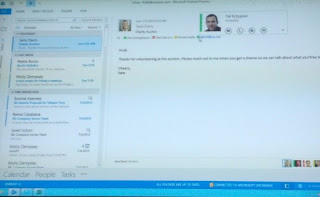
What
if when you sent a message to someone, it had a very good chance of
going to someone else in your contact list? That would be pretty scary
right? That what some Skype users are reporting.
The bug was first discussed
in Skype’s user forums, and seems to have followed a June 2012 update
of the Skype software. Skype has confirmed the bug existence and that a
fix is in the works. However, the company characterizes the bug as
“rare.”
Purchased by Microsoft last year
for $8.5 billion, the Luxemburg company which has as many as 40 million
people using its service at a time during peak periods, explained that
messages sent between two users were in limited cases being copied to a
third party, but did not elaborate further on the matter.
Five other individuals of the
Microsoft-owned program confirmed they were also seeing instant messages
being sent to the wrong person from their contact list. Sometimes it's
just a few messages, while other times it's a whole conversation.
Skype has, on its blog,
confirmed the issue of a bug sending instant messages to wrong contacts
and has promised a fix. Addressing the issue, Skype wrote, "Based on
recent Skype customer forum posts and our own investigation over the
past couple of days, we have identified a bug that we are working hard
to fix."
Source:THN
kindly visit www.zoomgroup.com
join us on facebook
Friday, July 13, 2012
Bulgarian Hackers Group Arrested
Bulgarian Hackers Group arrested


Bulgarian
authorities say that after months of investigation they have busted the
“most powerful hacker group” in the country, the Cyber Warrior
Invasion. The operation was conducted by Bulgaria’s Sector for Computer
Crimes, Intellectual Property and Gambling and the territorial units of
the Chief Directorate for Fight with Organized Crime in the
municipalities of Pleven, Shumen, Plovdiv, Burgas, Haskovo, Stara Zagora
and Kyustendil.
Using cyber “terrorist” methods,
the group had attacked more than 500 websites worldwide, including
those of financial institutions, web-based companies, and governmental
and non-governmental organizations. On the confiscated computers, police
discovered databases with large amounts of stolen emails, social
network profiles and associated passwords, as well as stolen credit card
data.
The site www.cwi-group.org
was used by the members of the group to coordinate their activities.
Constantly changing its location and using a complex system of "zombie"
proxy servers they disguised its true location, and that of the
administrators. Despite the attempts to wipe out their tracks, hackers
were detected.The investigation unveiled that hacker group members
followed a strict hierarchical order, evidencing the high degree of
organization and coordination between them. They were structured into
different groups according to their access and power: "Administrators",
"Moderator", "Scanning team," "Donors / Sponsors", "Sectional
moderators", "Friends," "VIP Members" and group "members."
Four laptops, five desktop computers, seven portable digital information devices, three hard discs and over 200 CDs were seized.
Sourc: THN
for best Ethical Hacking and Counter Measures Training visit www.zoomgroup.com
Friday, July 6, 2012
Hacking For Dummies By Kevin Beaver, Stuart McClure

Name of Book:Hacking for Dummies
Author : Kevin Beaver
Please click HERE
For more updates visit www.zoomgroup.com.
Join ZOOM TECHNOLOGIES on facebook
Thursday, June 28, 2012
Special Combo offer (CCNP+EHCE) INR 18,000*/USD 360*/GBP 228*/NGN 57,249*

Special Combo offer and Package Price
CCNP+EHCE
INR 18,000*/USD 360*/GBP 228*/NGN 57,249*
Please visit www.zoomgroup.com for more details
Subscribe to:
Posts (Atom)